
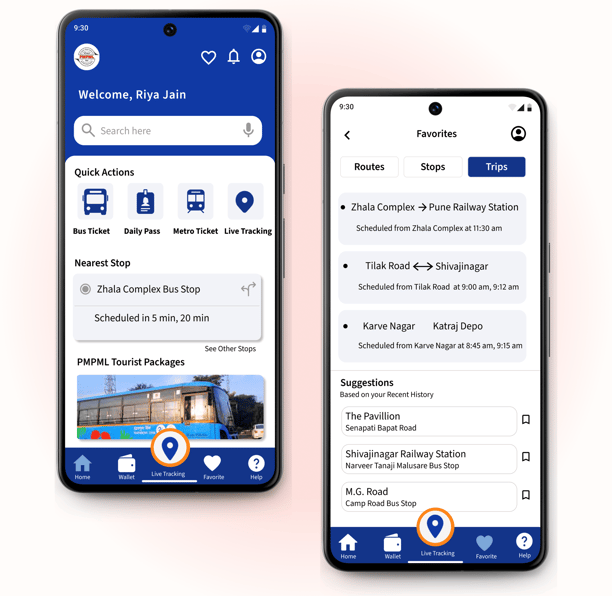
PMPML App Redesign Case Study
Pune City's Official Public Transportation App used by 3 million commuters.
What is the PMPML App?
The PMPML app is Pune City's official public transport application.
This public transport bus service provider for Pune, India, is designed to help passengers track live buses, plan bus routes, book tickets, and access other related information.
It serves millions of daily commuters, making the application essential for navigating the city efficiently.
Quick Glimpse of the Redesign


Discovery
Ideation
Design
Retrospective






Discovery
What is the Problem?
To understand the underlying problem, I conducted User Research.
Based on the user research data I was able to figure out that PMPML’s public transport app was lacking few efficient features, leading to frustrated commuters.
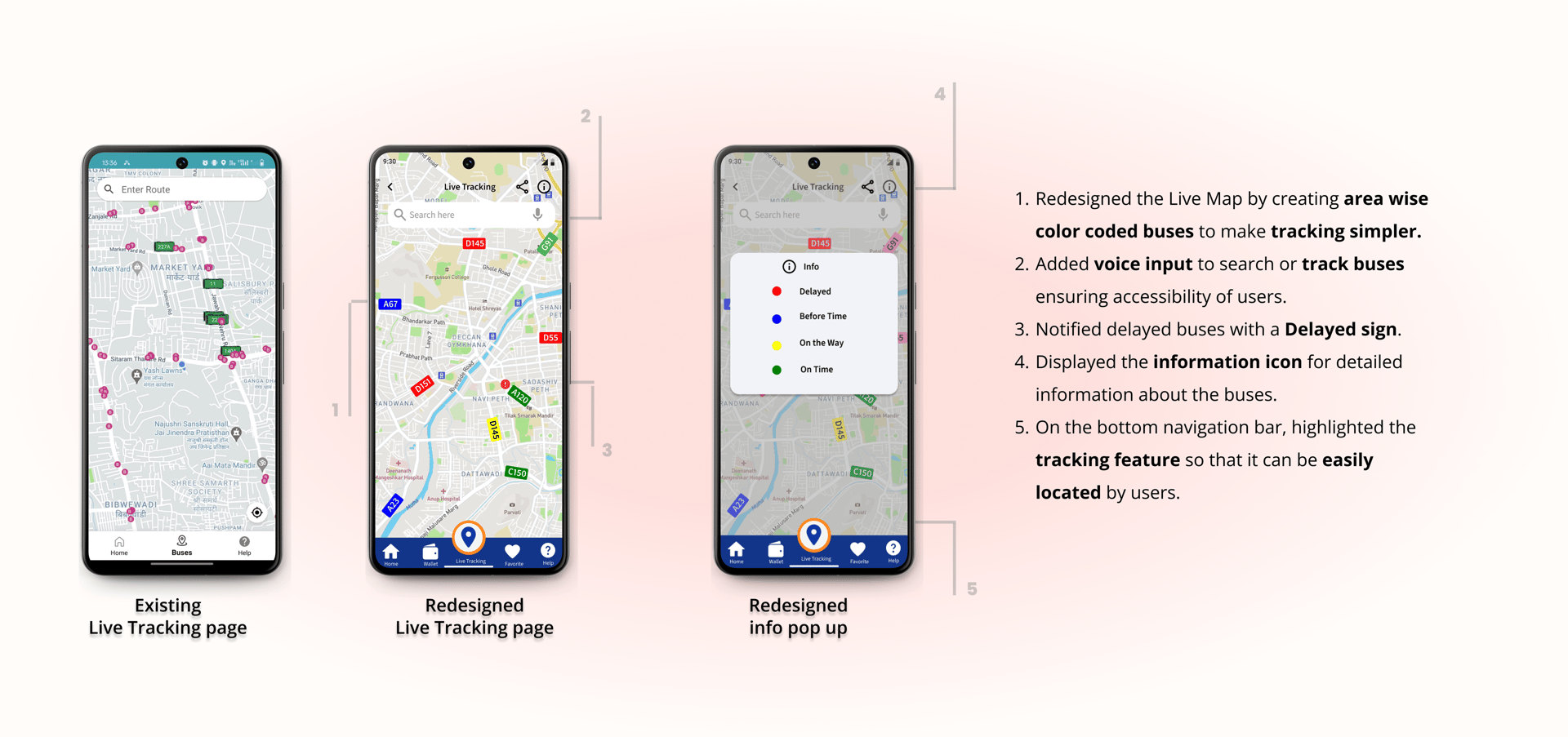
Buses were not updated on time that means Live tracking was inaccurate. (This was a developmental issue but as UX Designer I could design it better! )
No download option to save tickets offline, making ticket flow complex.
The App had tiny font in some sections which makes it lack of accessibility & inclusivity for visually impaired users.
Cluttered bottom navigation bar.
A better and user-friendly User Interface.
Process of Identifying Pain Points
I conducted surveys, interviews and performed competitor analysis to gain insights about actual pain points faced by users by using the current application.
Interviews Findings:
I got the opportunity to interview two users who were a University Student and Office-goer which indicates that:
they were frequent app users.
The Application did not support multiple languages.
Users felt UI was old and boring.
Surveys Findings:
Users waiting on the bus stops were in a hurry and I found out that surveys would have been a better way to learn about the issues.
Hence, I conducted surveys where approximately 5-6 people filled out the survey forms. This gave me insights such as:
Most travelers were between the age of 18-30 years.
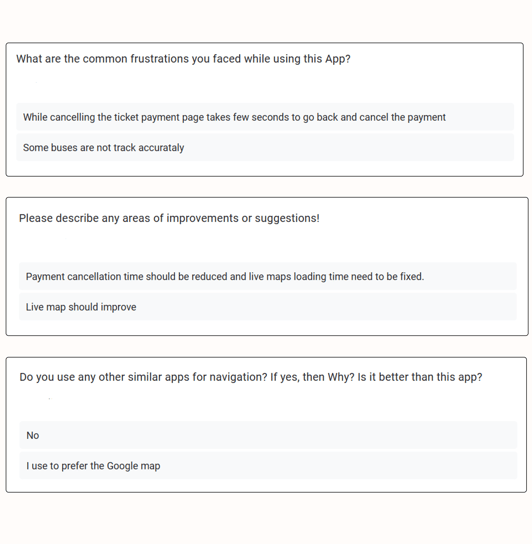
Live Map tracking was inaccurate.
Competitor Analysis Findings:
I compared apps like Mumbai Local Train App, Moovit and Delhi Metro App to identify strengths and weaknesses. Findings included:
A clear and intuitive bottom navigation bar.
Modern and user-friendly Visual Design.
Ticket History Should be saved.
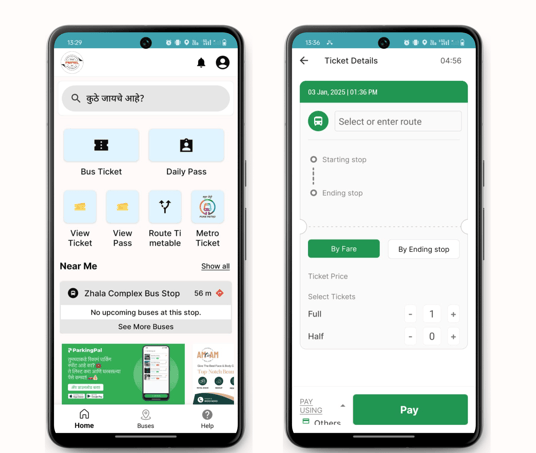
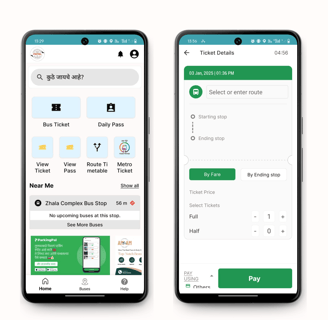
The Current UI of PMPML App
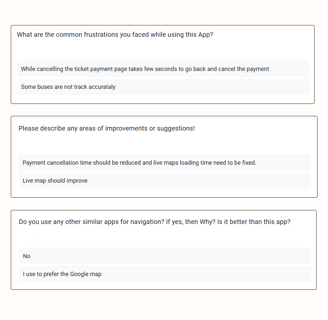
Filtered Survey responses
Play Store reviews:
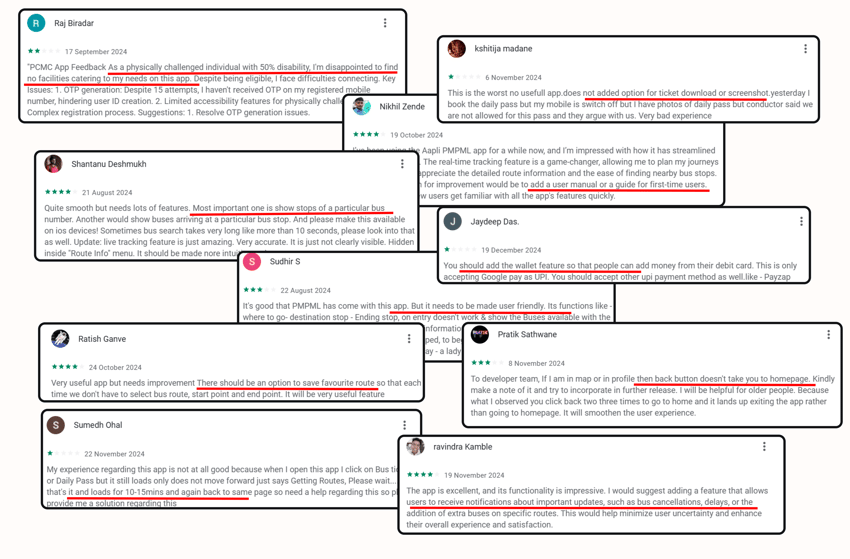
Unfortunately, Interviews and Surveys resulted in insufficient data. Hence, I had to take help of Play Store reviews where I got raw and natural feedback about the app.
A physically challenged user didn't find the app catering to their needs.
No manual or guide for first time users.
No option to download tickets.
A wallet feature should be added.
A feature to save favorite routes, stops and buses.

Competitor Analysis
Filtered Play Store reviews
Ideation
User Personas
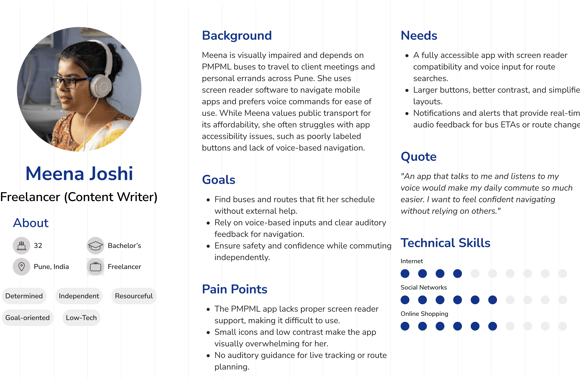
Based on the Findings, I developed two User Personas which represent different types of users.
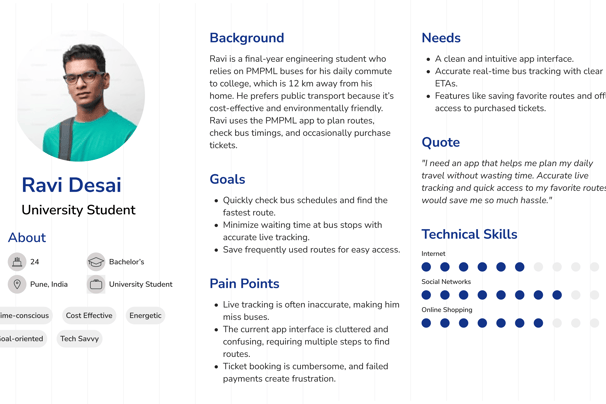
Daily Commuters (Ravi): A University Student who represents the users who are frequent public transportation users aged between the age group of 18-30 years.
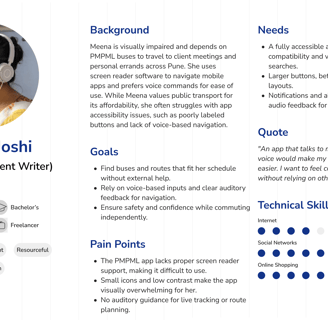
Accessibility Focused-Users (Meena): A middle aged woman who has low eye-sight and often requires help while reading small fonts.
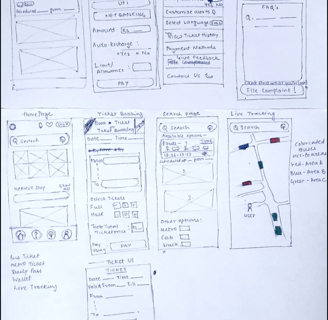
Sketching
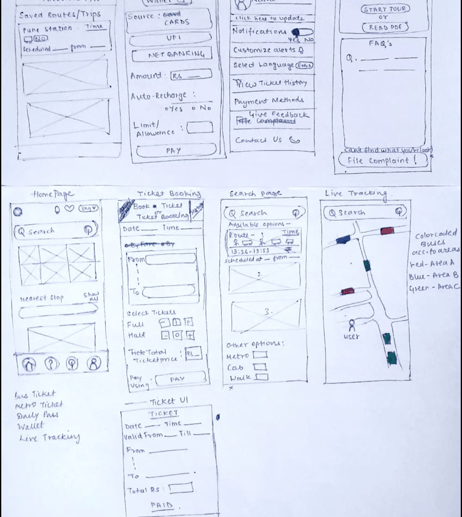
I always start the ideation process with pen and paper.
It gives me an basic idea of placement of elements.
User Persona 1
User Persona 2
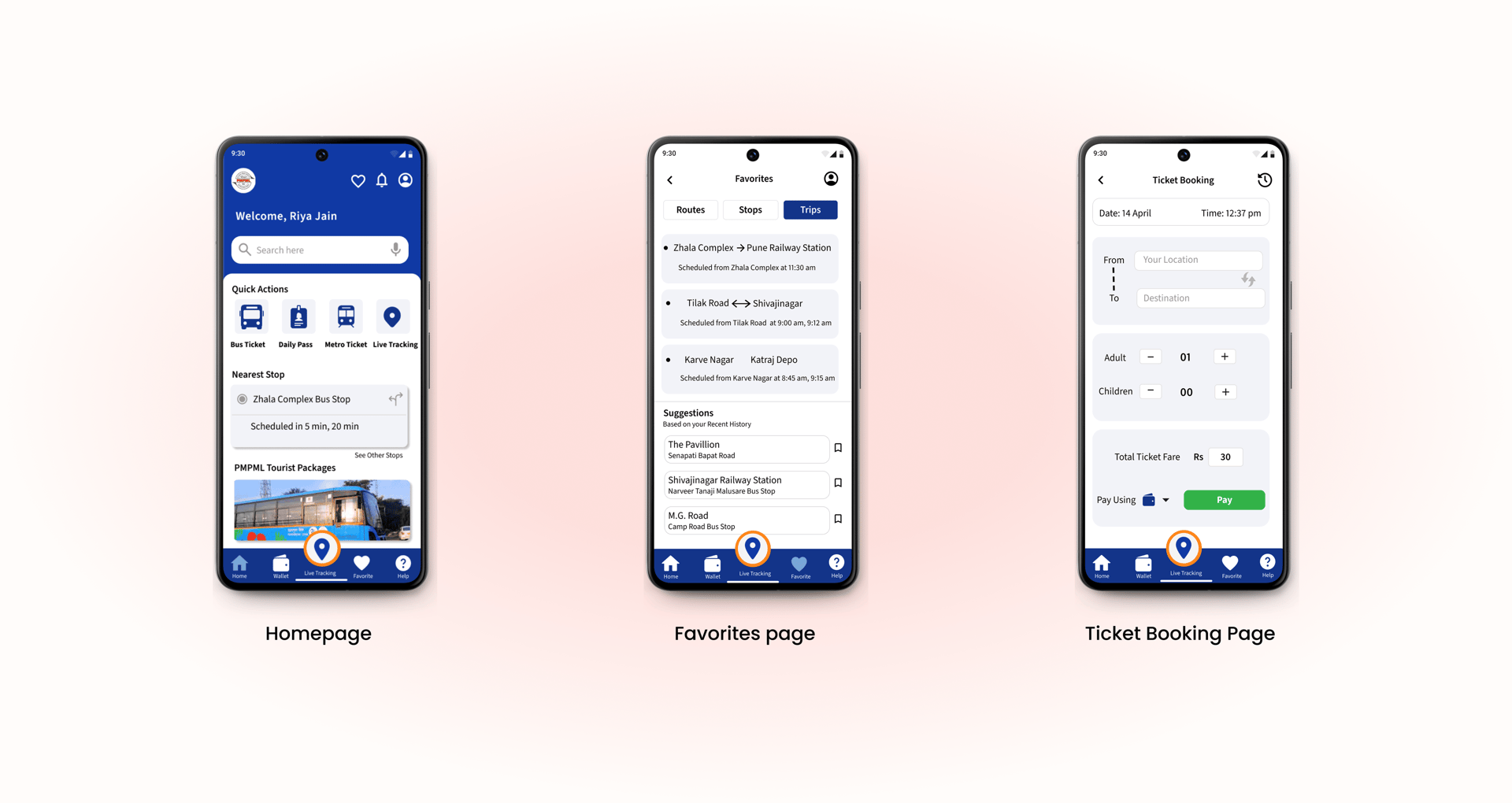
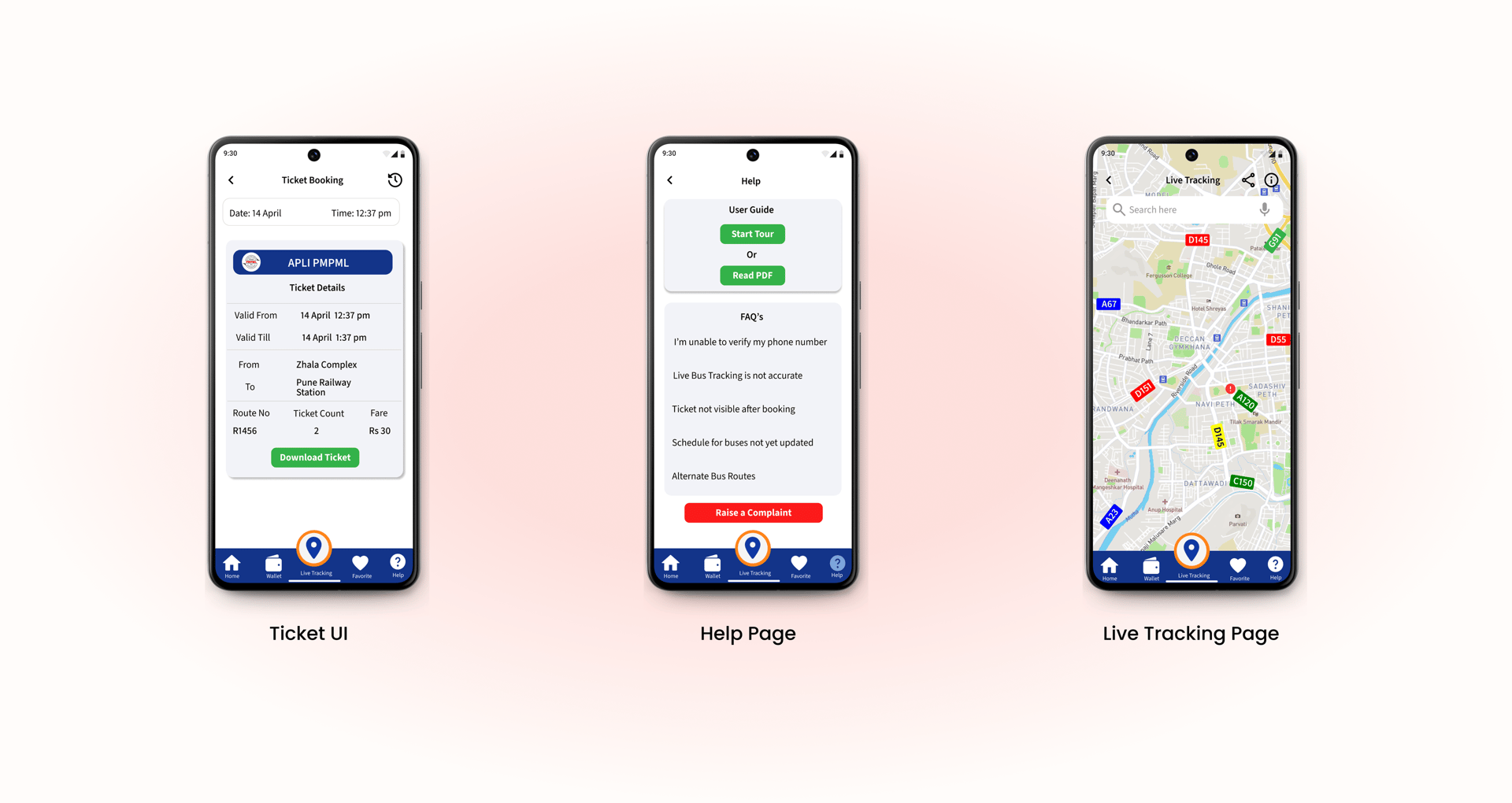
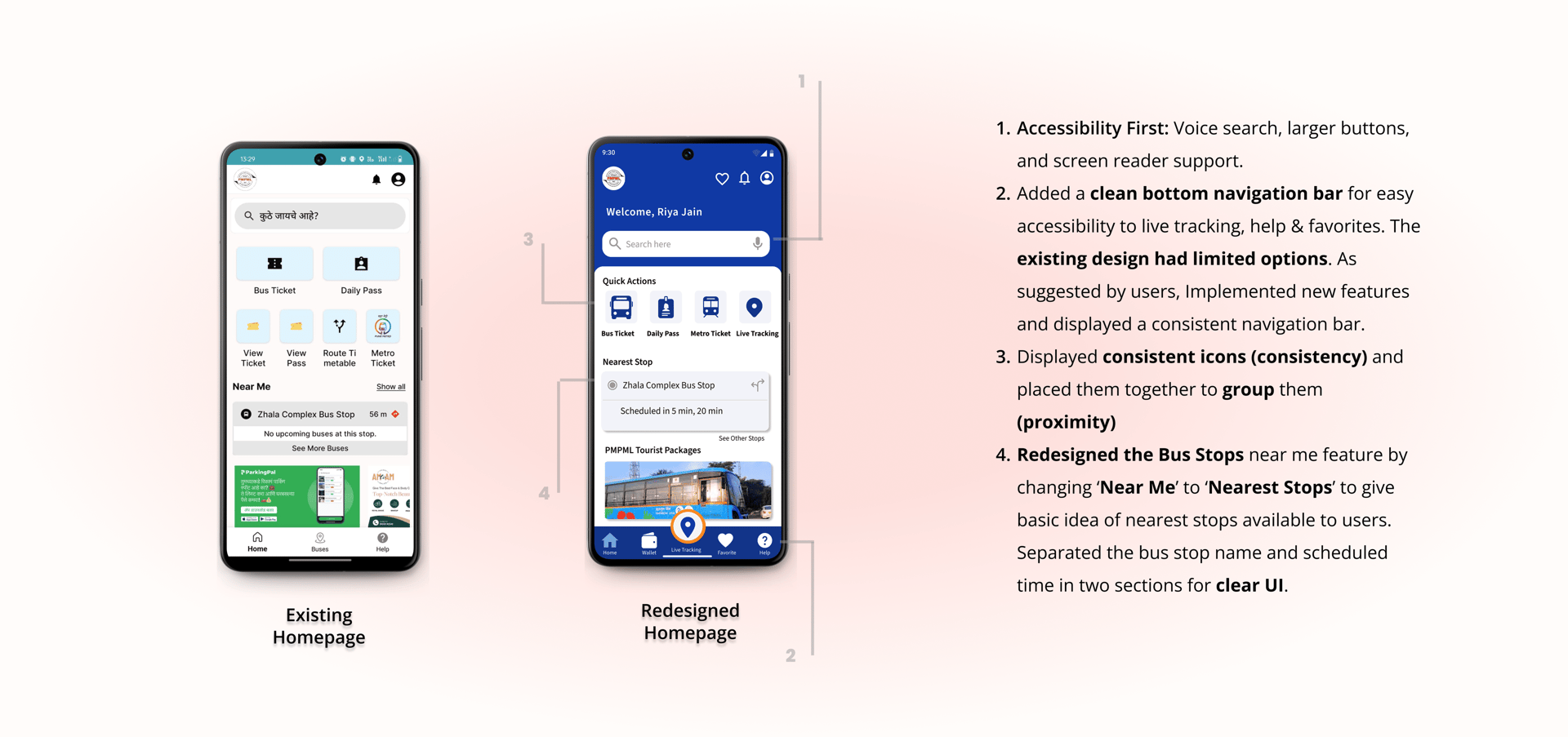
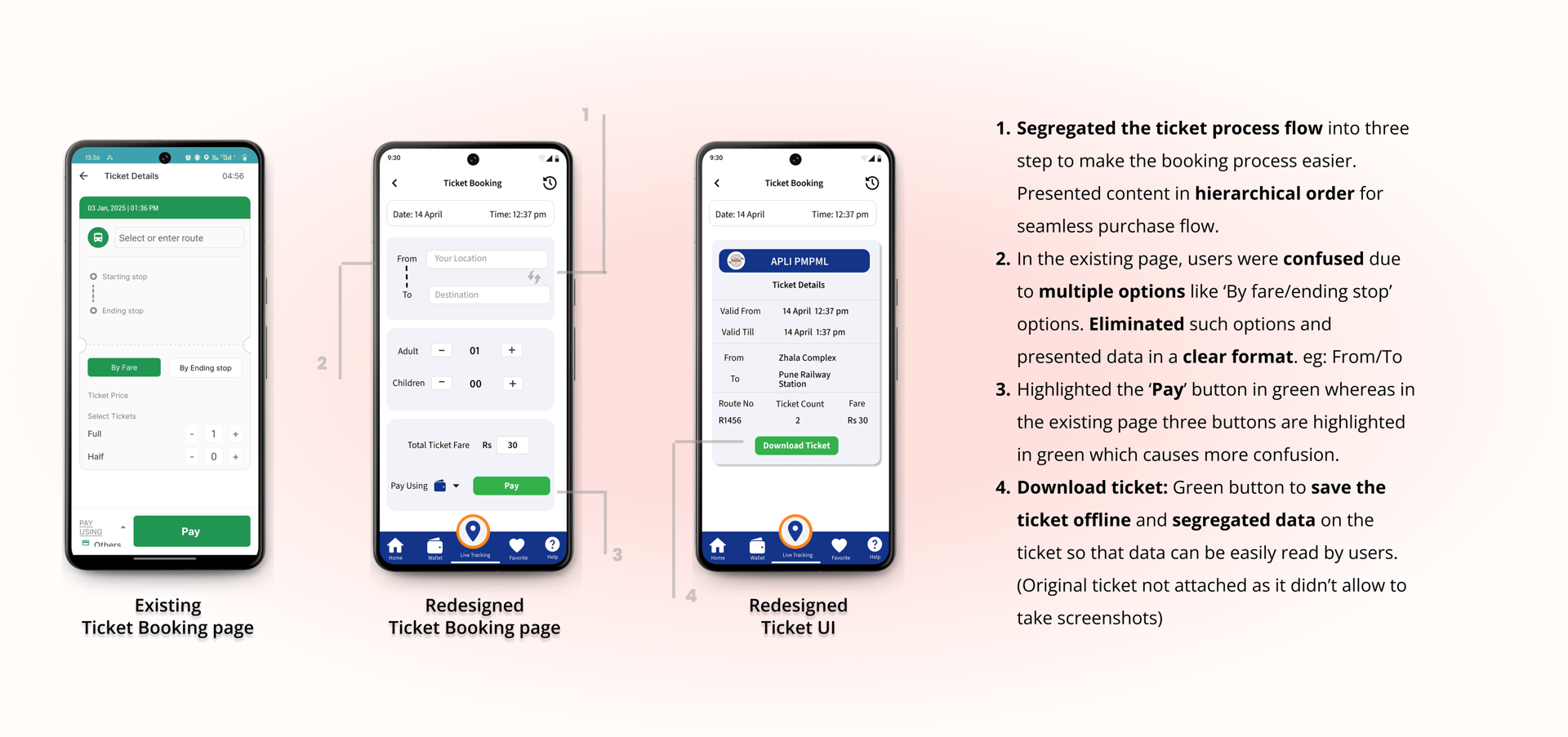
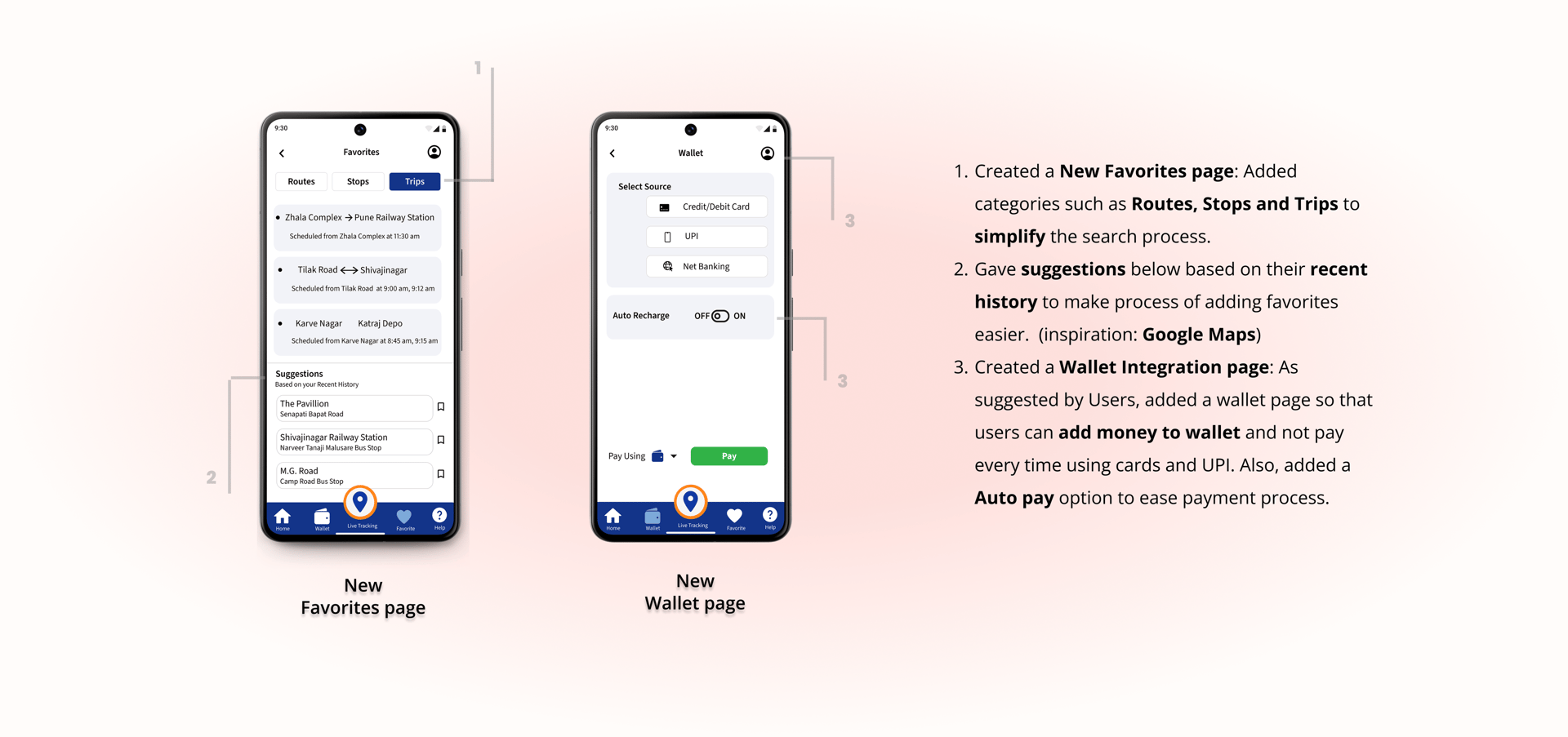
Design: Before & After

Retrospective
What I learned from the Whole Process?
User-Centered Design is Key – Understanding real user pain points helped ideate solutions that directly address user needs, rather than assuming what might work.
Accessibility is Often Overlooked – Challenges faced by visually impaired users focused on the importance of designing accessible interfaces from the start.
Simplifying Complex Systems – The ticketing system and navigation were confusing, supporting the need for intuitive UX flows.
Iterative Design is Essential – Testing with real users can provided more insights, supporting iterative prototyping and feedback.
What I Would Do in the Future with More Resources?
Conduct In-Depth User Research – Engage with users through surveys, interviews, and usability tests for deeper insights.
Collaborate with Stakeholders – Work with PMPML authorities and developers to integrate real-time GPS tracking and better payment systems.
Enhance Accessibility Features – Implement voice commands, screen reader support, and haptic feedback for a more accessible experience.
Prototype & Test More Iteratively – Develop multiple iterations and conduct A/B testing to refine usability and efficiency.
Read more of my case studies
LibraSync
Get in touch👋 - sayali.ippalpalli@gmail.com

